

Products
-

Avanafil
Chemical Name:Avanafil
CAS NO.:330784-47-9
Appearance:white to off-white powder
Purpose:Treatment of male erectile dysfunction
Assay:99%
-

20mg Retatrutide Weight Loss Peptide Lyophilized Powder Reta Vials Injection 99% Retatrutide
Purity: >99%
Specification: 20mg
State: Lyophilized Powder
Transport Package: 10vials/Box
Appearance: White powder
-

Nad+ 500mg
Purity: 99%
Specification: 500mg/1000mg
State: Solid
Grade Standard: Medicine Grade
customize: Customizable
-
Nad+ 1000mg
Purity: 99%
Specification: 500mg/1000mg
State: Solid
Grade Standard: Medicine Grade
customize: Customizable
-
99%Purity Nad Powder Nicotinamide Adenine Dinucleotide Nad+ 500mg 1000mg
Purity:>99%
Specification: 500mg/1000mg
State: Solid
Grade Standard: Medicine Grade
-

15mg High Purity Peptides Powder Liraglutide
Purity: >99%
State: Lyophilized Powder
Appearance: White powder
Specification: 5mg/10mg/15mg/20mg/30mg
Grade: Medical Grade
-
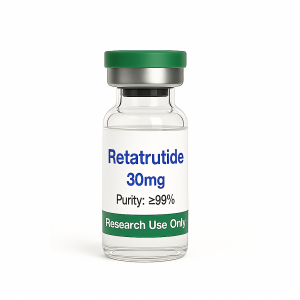
Retatrutide Lyophilized Powder 30mg for Diabetes and Weight Loss
Purity: >99%
Specification: 5mg/10mg/15mg/20mg/30mg
State: Lyophilized Powder
Transport Package: 10vials/Box
Appearance: White powder
-

High Purity Peptides Retatrutide 10mg for Weight Loss and Diabetes
Purity: >99%
State: Lyophilized Powder
Appearance: White powder
Specification: 5mg/10mg/15mg/20mg/30mg
-

Inclisiran sodium
Inclisiran sodium API (Active Pharmaceutical Ingredient) is studied primarily in the field of RNA interference (RNAi) and cardiovascular therapeutics. As a double-stranded siRNA targeting the PCSK9 gene, it is used in preclinical and clinical research to evaluate long-acting gene-silencing strategies for lowering LDL-C (low-density lipoprotein cholesterol). It also serves as a model compound for investigating siRNA delivery systems, stability, and liver-targeted RNA therapeutics.
-

Fmoc-Gly-Gly-OH
Fmoc-Gly-Gly-OH is a dipeptide used as a basic building block in solid-phase peptide synthesis (SPPS). It features two glycine residues and an Fmoc-protected N-terminus, allowing for controlled peptide chain elongation. Due to glycine’s small size and flexibility, this dipeptide is often studied in the context of peptide backbone dynamics, linker design, and structural modeling in peptides and proteins.
-

Fmoc-Thr(tBu)-Phe-OH
Fmoc-Thr(tBu)-Phe-OH is a dipeptide building block commonly used in solid-phase peptide synthesis (SPPS). The Fmoc (9-fluorenylmethyloxycarbonyl) group protects the N-terminus, while the tBu (tert-butyl) group protects the hydroxyl side chain of threonine. This protected dipeptide is studied for its role in facilitating efficient peptide elongation, reducing racemization, and modeling specific sequence motifs in protein structure and interaction studies.
-

AEEA-AEEA
AEEA-AEEA is a hydrophilic, flexible spacer commonly used in peptide and drug conjugation research. It consists of two ethylene glycol-based units, making it useful for studying the effects of linker length and flexibility on molecular interactions, solubility, and biological activity. Researchers often use AEEA units to evaluate how spacers influence the performance of antibody-drug conjugates (ADCs), peptide-drug conjugates, and other bioconjugates.