

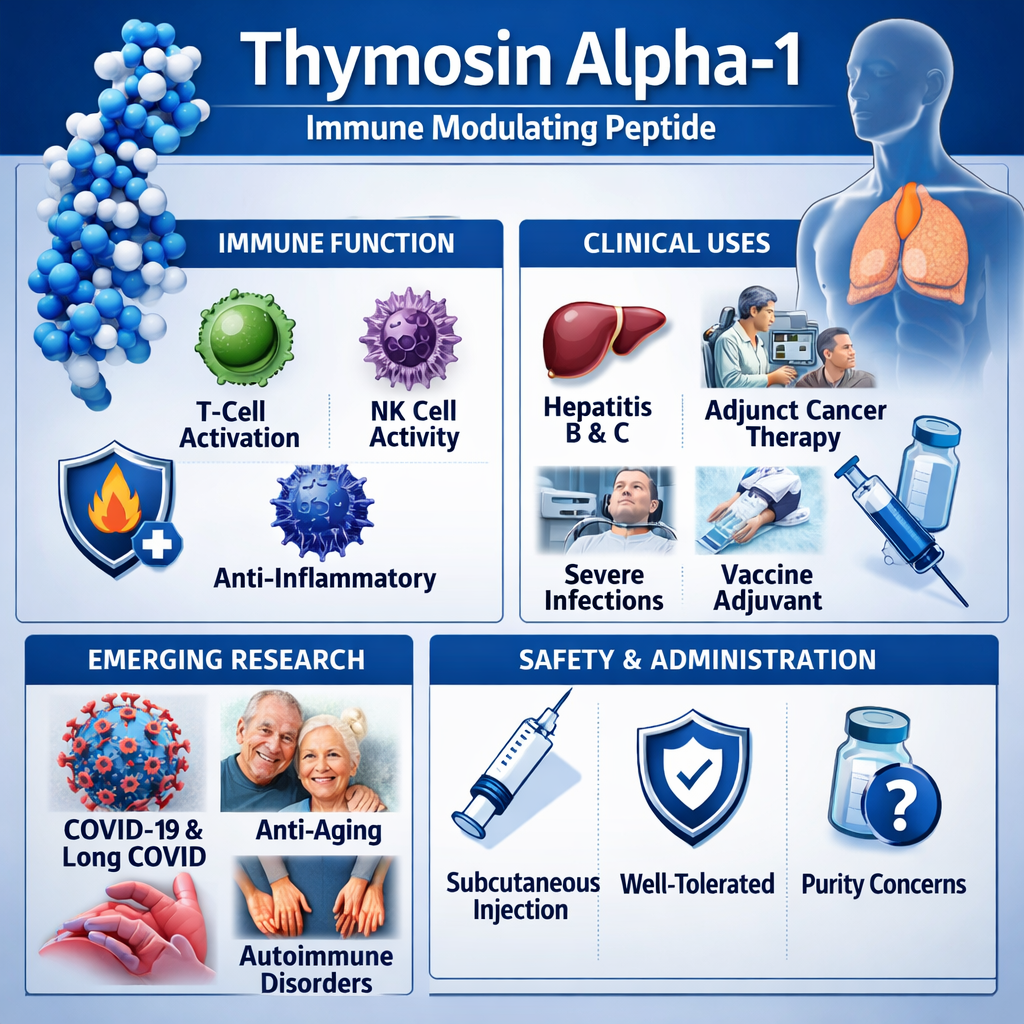
With the rapid advancement of modern immunology, biologically active molecules that regulate immune function have gained increasing attention. Among them, Thymosin Alpha-1 (Tα1), a naturally occurring peptide derived from the thymus gland, has emerged as an important focus in both clinical and research settings due to its multifaceted immunomodulatory properties.
1. What is Thymosin Alpha-1?
Thymosin Alpha-1 is a small peptide composed of 28 amino acids, originally isolated from thymic tissue. The thymus plays a central role in the development and maturation of T lymphocytes, which are essential for adaptive immunity. As a key thymic peptide, Tα1 contributes significantly to the regulation and maintenance of immune function.
2. Mechanism of Action: Regulation Rather Than Stimulation
Unlike conventional “immune boosters,” Thymosin Alpha-1 functions primarily as an immunomodulator, helping to maintain immune balance. Its mechanisms include:
- Promotion of T-cell differentiation and maturation
Enhances the body’s ability to recognize and respond to pathogens - Activation of natural killer (NK) cells
Improves the clearance of virus-infected and malignant cells - Regulation of cytokine production
Helps maintain immune homeostasis and prevents excessive inflammation - Improvement of immune tolerance
May reduce inappropriate immune responses under certain conditions
This bidirectional regulatory capability makes Tα1 particularly valuable across a range of disease states.
3. Current Clinical Applications
In several countries, Thymosin Alpha-1 has been approved or used clinically for:
- Chronic viral infections (e.g., hepatitis B and C)
- Adjunctive cancer therapy to counteract immunosuppression from chemotherapy or radiotherapy
- Immunodeficiency conditions, including severe infections and critical illness
- Vaccine adjuvant use to enhance immune responses
However, regulatory approval and clinical guidelines vary significantly by region.
4. Emerging Research and Potential Uses
Recent studies have explored the potential role of Thymosin Alpha-1 in:
- Emerging infectious diseases (e.g., COVID-19)
- Long COVID, as a possible immune recovery aid
- Anti-aging medicine, particularly in addressing immunosenescence
- Autoimmune disorders, due to its immune-balancing effects
While promising, many of these applications remain investigational and require further large-scale, randomized controlled trials.
5. Safety and Considerations
Thymosin Alpha-1 is generally well tolerated, with a favorable safety profile. Reported side effects are usually mild and may include:
- Local injection site reactions (redness or discomfort)
- Mild fatigue or headache
Important considerations include:
- Long-term safety data are still limited
- Variability in product quality, especially in unregulated “research peptide” markets
- Use should be guided by qualified healthcare professionals rather than self-administration
6. Conclusion
Thymosin Alpha-1 represents a promising immunomodulatory agent with demonstrated benefits in infectious diseases and cancer-related immune support. Its ability to balance rather than simply stimulate the immune system distinguishes it from traditional therapies and aligns with the principles of precision medicine.
Nevertheless, broader clinical adoption will depend on more robust scientific evidence. Until then, careful evaluation and medically supervised use remain essential to ensure both efficacy and safety.
Post time: Mar-31-2026