

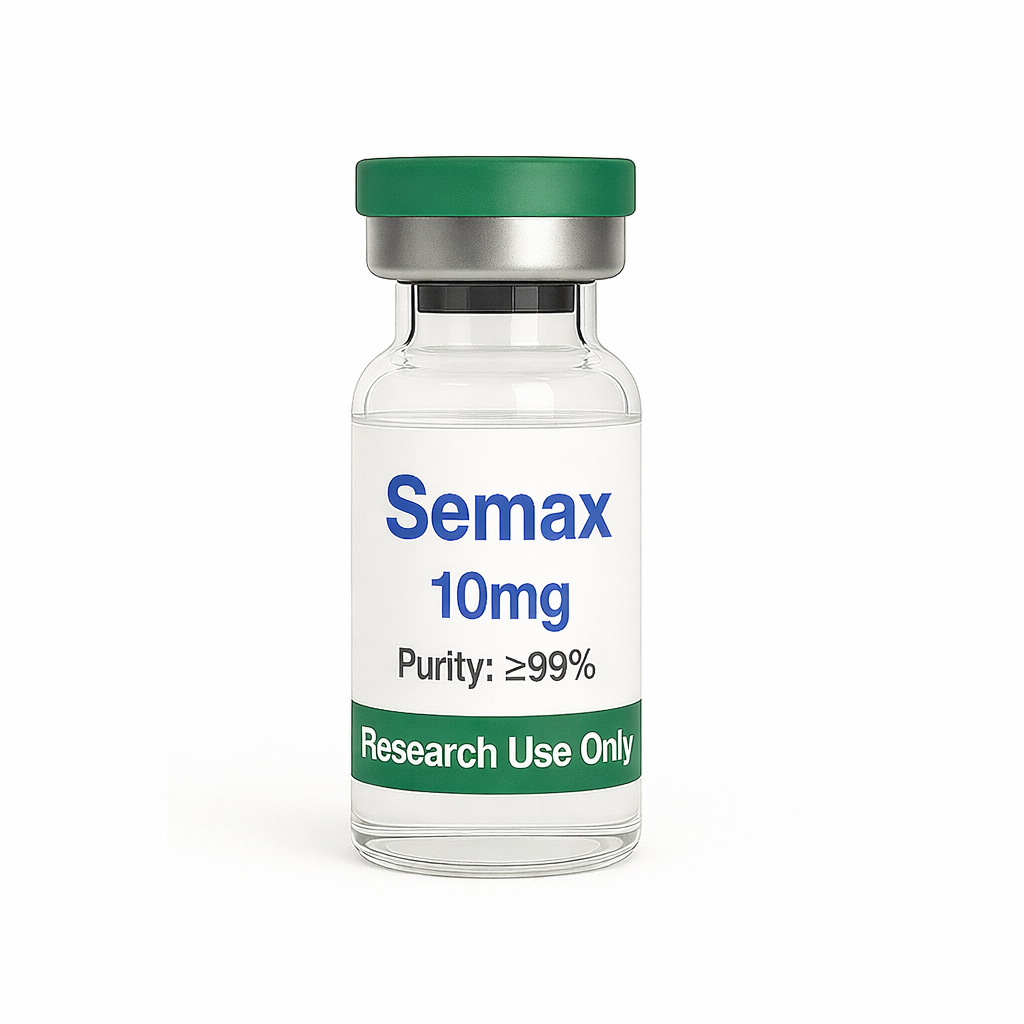
In recent years, interest in cognitive enhancement and brain health has expanded rapidly, bringing renewed attention to a peptide compound known as Semax. Originally developed in Russia during the late 20th century, Semax is a synthetic nootropic peptide that has been studied for its potential cognitive-enhancing and neuroprotective properties. While it remains far less well known internationally than compounds such as piracetam or modafinil, Semax occupies a unique niche due to its distinct mechanism of action and clinical background.
Origins and Research Background
Semax was designed as a modified fragment of adrenocorticotropic hormone (ACTH). Researchers sought to preserve the neuroactive benefits of ACTH while eliminating its hormonal side effects. This led to the creation of a short peptide capable of influencing brain function without significantly affecting the endocrine system.
Over the decades, Semax has been investigated in Russia and neighboring countries for a variety of neurological applications, including cognitive impairment, post-stroke rehabilitation, and optic nerve disorders. Although it has not received approval from the U.S. Food and Drug Administration (FDA), it has been used clinically in parts of Eastern Europe, either by prescription or as an over-the-counter medication. Ongoing research continues to explore its broader potential, including its role in neuroprotection and cognitive enhancement in healthy individuals.
Mechanisms of Action
Semax exerts its effects through multiple neural pathways. One of its primary actions involves modulation of the dopaminergic and serotonergic systems. Dopamine and serotonin play crucial roles in attention, motivation, emotional regulation, and overall cognitive performance. By influencing these neurotransmitter systems, Semax may support improvements in focus, mood stability, and mental clarity.
Another important mechanism is its effect on brain-derived neurotrophic factor (BDNF). BDNF is essential for neuronal survival, synaptic plasticity, and the formation of new neural connections. Elevated BDNF levels are commonly associated with enhanced learning capacity, memory retention, and resilience to stress. Studies suggest that Semax can increase BDNF expression, contributing to its potential long-term cognitive and neuroprotective benefits.
In addition, Semax demonstrates antioxidant and anti-inflammatory properties, which may help protect neural tissue from oxidative stress and inflammation—two processes closely linked to neurodegenerative conditions and brain injury.
Effects on Cerebral Blood Flow
Beyond its neurochemical actions, Semax has also been shown to improve cerebral blood circulation. Adequate blood flow is essential for delivering oxygen and nutrients to brain tissue, particularly in conditions such as ischemic stroke. By supporting cerebral perfusion, Semax may aid cognitive recovery and enhance brain function during periods of compromised circulation.
Administration and Onset
Semax is most commonly administered via intranasal delivery, a method that allows the peptide to be absorbed through the nasal mucosa and reach the brain efficiently. This route partially bypasses the blood–brain barrier and enables relatively rapid onset of effects, often within 15 to 20 minutes. The convenience and speed of this delivery method contribute to Semax’s appeal among researchers and users alike.
Dosage varies depending on the intended use. Lower doses are typically employed for cognitive support in healthy individuals, while higher or more frequent dosing may be used in clinical settings under medical supervision.
Safety Profile and Side Effects
Compared with many conventional nootropics, Semax appears to have a favorable safety profile. Reported side effects are generally mild and transient, most commonly including nasal irritation, mild headache, or short-lived restlessness. These effects usually resolve without intervention.
That said, Semax is not universally appropriate. Individuals with a history of severe psychiatric disorders, particularly anxiety or manic episodes, should exercise caution, as modulation of neurotransmitter systems may exacerbate underlying symptoms.
Contraindications and Drug Interactions
Semax should not be used by individuals with known hypersensitivity to its components. Due to limited safety data, its use is generally discouraged during pregnancy and breastfeeding.
Potential interactions may occur when Semax is combined with other substances that affect dopamine or serotonin levels, such as antidepressants (including SSRIs and MAOIs), stimulants, or antipsychotic medications. While comprehensive interaction studies are still lacking, the possibility of additive or unpredictable effects underscores the importance of medical guidance when combining Semax with other drugs or nootropic compounds.
Conclusion
Semax represents an intriguing example of a peptide-based nootropic with both cognitive and neuroprotective potential. Its multifaceted mechanism of action, relatively rapid onset, and generally good tolerability distinguish it from many traditional cognitive enhancers. However, despite promising findings, much of the existing research remains regionally concentrated and focused on short-term use.
As interest in peptide therapeutics continues to grow, further rigorous studies will be essential to clarify Semax’s long-term safety, efficacy, and broader applicability. Until then, its use—whether clinical or experimental—should be approached thoughtfully and ideally under professional supervision.
Post time: Jan-15-2026