


Key Points
Triple-Action Approach:
Retatrutide acts on three receptors—GIP, GLP-1, and glucagon—providing a unique triple-agonist mechanism that may further enhance metabolic regulation and weight-management effects.
Remarkable Weight Loss Potential Outcomes:
Retatrutide has drawn attention for its notable potential in supporting weight loss. Early research highlights its ability to help individuals achieve substantial results, potentially exceeding those of some existing therapies. As it remains under clinical investigation, guidance from a healthcare professional is essential.
Retatrutide is an emerging investigational medication that has gained significant interest for its promising effects on weight loss. Initially developed to improve metabolic function, including blood sugar regulation and energy balance, it has quickly become a focal point in the health and wellness community due to its strong performance in early studies.
As a peptide-based therapy, Retatrutide belongs to a class of molecules made from linked amino acids, designed to mimic natural hormones in the body. By activating multiple metabolic pathways simultaneously, it may help regulate appetite, enhance energy expenditure, and support healthier metabolic function. This positions Retatrutide as a potential multi-purpose agent with the ability to influence both metabolic health and weight management.
How Does Retatrutide Help With Weight Loss?
When using Retatrutide, it is essential to follow the guidance of a qualified healthcare professional. Retatrutide works as a triple incretin receptor agonist, targeting three key hormone pathways:
1. GLP-1 (Glucagon-Like Peptide-1)
2. GIP (Glucose-Dependent Insulinotropic Polypeptide)
3. Glucagon
These hormones play important roles in regulating blood sugar, appetite, energy expenditure, and metabolic balance. By activating all three receptors, Retatrutide provides a more comprehensive approach to controlling hunger and supporting metabolic function.
Once administered, Retatrutide sends stronger satiety signals to the brain, helping reduce appetite and curb cravings. At the same time, its glucagon pathway activity may enhance energy expenditure, supporting further weight-loss effects. This multi-target mechanism makes it easier for individuals to maintain a lower-calorie diet and adhere to healthier habits, which is why the medication shows strong potential in assisting weight management.
The Triple Action of Retatrutide
What sets Retatrutide apart is its ability to act on three metabolic pathways simultaneously. As a triple agonist targeting GLP-1, GIP, and glucagon receptors, Retatrutide not only suppresses appetite but may also enhance energy expenditure and support healthier metabolic function. This multi-pathway mechanism offers a unique approach to weight management and metabolic regulation. Its broad metabolic effects position Retatrutide as a promising future option for individuals seeking a more comprehensive strategy for improving health.
Retatrutide’s Broader Impacts
Retatrutide has potential benefits that extend beyond weight loss. By mimicking multiple gut-derived hormones that influence appetite control, glucose regulation, and energy balance, it delivers a more integrated metabolic response. This triple-action mechanism may encourage healthier eating patterns, improve metabolic efficiency, and help support better overall health outcomes. Although still under clinical investigation, Retatrutide’s multi-faceted profile suggests it could become a versatile tool for individuals managing both obesity and metabolic concerns.
| Medication | Mechanism of Action |
|---|---|
| Retatrutide | Tri-agonist (GLP-1, GIP, and glucagon receptors) |
| Tirzepatide | Dual GIP and GLP-1 receptor agonist |
| Semaglutide | GLP-1 receptor agonist |
How Is Retatrutide Administered?
Retatrutide is administered via subcutaneous injection, meaning the medication is delivered into the fatty tissue just beneath the skin. The injection process is simple and uses a fine needle similar to those used for insulin or other incretin-based therapies. Common injection sites include the abdomen, thigh, or upper arm, and rotating the site helps minimize local irritation.
Healthcare providers usually instruct patients on proper injection technique, including how to use the injection device, choose a suitable injection site, and safely dispose of needles. Thanks to the convenience of subcutaneous administration, most patients can learn to self-inject, which supports long-term adherence to treatment.
How Retatrutide Differs From Other Therapies?
Retatrutide stands out from other weight-loss medications due to its triple-agonist mechanism. While many current therapies—such as semaglutide—target only the GLP-1 receptor, and drugs like tirzepatide activate GLP-1 and GIP receptors, retatrutide goes a step further by acting on three key metabolic hormone receptors:
1. GLP-1 (glucagon-like peptide-1)
2. GIP (glucose-dependent insulinotropic polypeptide)
3. Glucagon receptor
This multi-target approach enables retatrutide to influence appetite regulation, glucose control, and energy expenditure simultaneously. Early research shows that retatrutide may achieve even greater weight-loss effects than GLP-1–only or dual-agonist therapies, representing a major advancement in metabolic treatment.
Compared to tirzepatide, which works through a dual-hormone system (GLP-1 + GIP), retatrutide’s inclusion of glucagon receptor activation expands its metabolic footprint. This reflects a broader trend in obesity medicine toward therapies that harness multiple hormonal pathways for more comprehensive treatment effects.
Scientific Principles Behind Retatrutide Development
The development of retatrutide builds on extensive research into incretin hormones and their roles in appetite, glucose regulation, and energy balance. GLP-1 and GIP are well established as key regulators of insulin secretion and satiety, while glucagon has been recognized for its ability to increase energy expenditure and promote fat mobilization.
By studying the complementary actions of these hormones, researchers designed a peptide capable of simultaneously activating all three receptor systems. Using advanced peptide engineering, retatrutide was created to coordinate these metabolic signals in a synergistic way, enhancing its therapeutic potential.
This multi-agonist strategy represents a new generation of obesity and metabolic disease treatments, integrating appetite reduction, improved glycemic control, and increased energy burn within a single agent.
Mechanism of Action
Retatrutide’s effectiveness stems from its ability to mimic three natural metabolic hormones—GLP-1, GIP, and glucagon—and activate their respective receptors. By engaging these pathways at the same time, retatrutide triggers a broad set of physiological responses that contribute to weight loss and metabolic improvement.
Key effects include:
Reduced Appetite and Caloric Intake:GLP-1 and GIP receptor activation suppresses appetite, slows gastric emptying, and decreases food intake.
Improved Glycemic Control:
1. Enhanced insulin secretion
2. Reduced inappropriate glucagon release
3. Improved insulin sensitivity
Increased Energy Expenditure: Glucagon receptor activation promotes fat oxidation and raises basal metabolic rate, contributing to weight loss beyond reduced caloric intake.
Together, these actions help reduce body weight, improve metabolic health, and support better glycemic regulation—making retatrutide a promising therapy for obesity and type 2 diabetes management.
Impact on Appetite and Metabolism
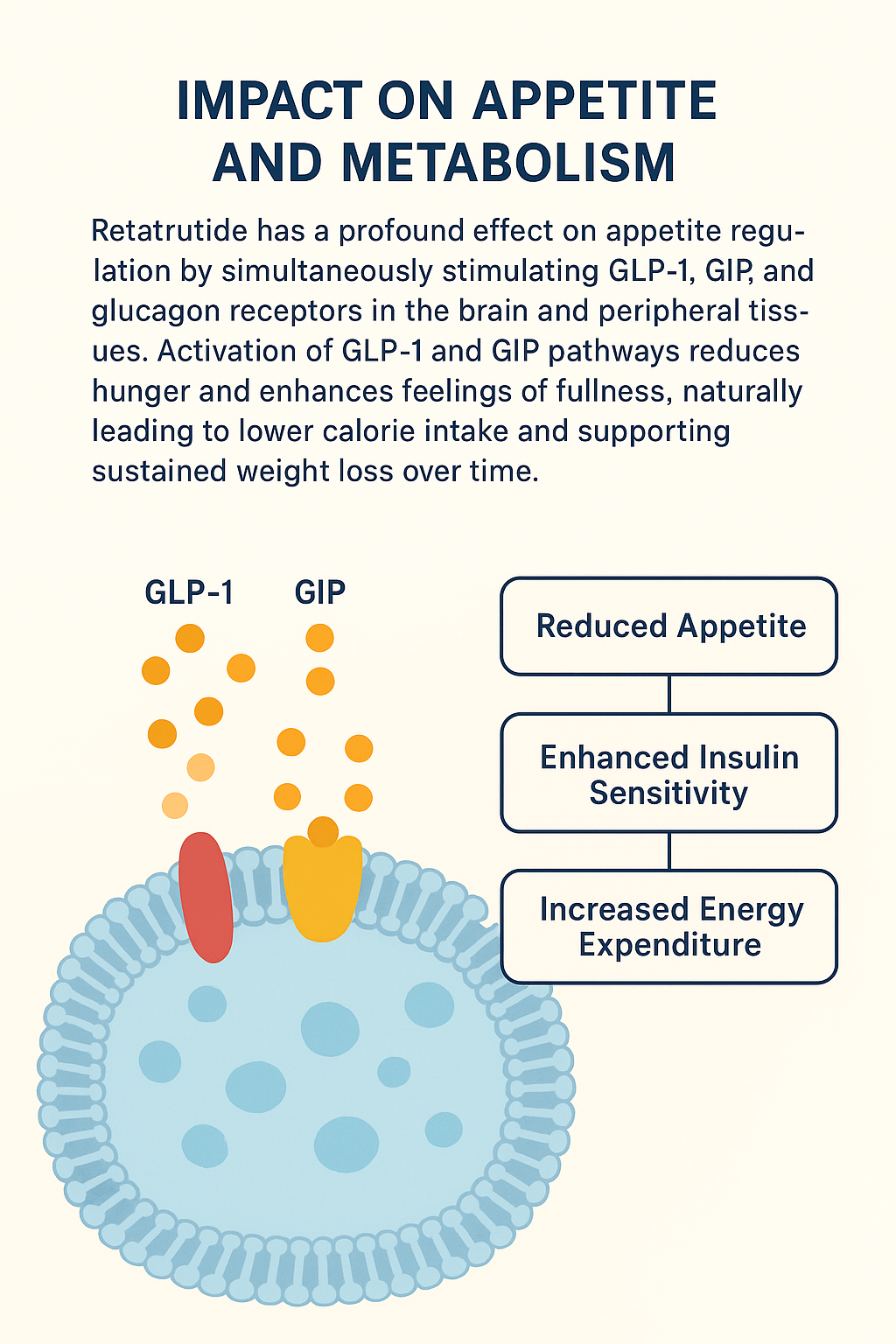
Retatrutide has a profound effect on appetite regulation by simultaneously stimulating GLP-1, GIP, and glucagon receptors in the brain and peripheral tissues. Activation of GLP-1 and GIP pathways reduces hunger and enhances feelings of fullness, naturally leading to lower calorie intake and supporting sustained weight loss over time.
Beyond appetite control, retatrutide exerts a triple-pronged metabolic impact:
1. Enhanced Insulin Sensitivity: GLP-1 and GIP receptor activation improves glucose regulation, helping the body efficiently use circulating sugar.
2. Increased Energy Expenditure: Glucagon receptor activation elevates basal metabolic rate and promotes fat oxidation.
3. Optimized Fat Metabolism: By coordinating the effects of all three hormonal pathways, retatrutide encourages the mobilization and burning of stored fat.
This comprehensive modulation of both appetite and metabolism creates an ideal environment for consistent weight loss and contributes to improvements in body composition and overall metabolic health, including reductions in body mass index (BMI) and improved glycemic control.
Long-Term Benefits for Weight Management
One of the key advantages of Retatrutide is its potential to provide long-term weight management benefits. By targeting three pathways—GLP-1, GIP, and glucagon—Retatrutide helps regulate appetite, improve metabolic function, and potentially increase energy expenditure. This triple-action mechanism may help establish a healthier weight set point, making it easier to maintain weight loss over time. Additionally, it may improve insulin sensitivity, reduce inflammation, and lower the risk of obesity-related complications, such as cardiovascular disease and type 2 diabetes.
Using Retatrutide as part of a long-term weight management plan can enhance overall health and well-being, supporting not only physical appearance but also metabolic health and quality of life. The reduction in obesity-related risks may contribute to a longer, healthier life.
Key Findings on Retatrutide
Early clinical studies suggest that Retatrutide has substantial potential for meaningful weight reduction. Some participants in trials experienced weight loss exceeding 20% after several months of treatment. These results indicate that Retatrutide could play a significant role in obesity management, though individual outcomes vary.
Many participants have reported life-changing experiences, gaining better control over their weight and associated metabolic health. However, results depend on individual factors, including lifestyle, metabolism, and overall health status.
Comparing Retatrutide to Traditional Weight Loss Methods
Understanding the differences between Retatrutide and conventional weight-loss approaches is key to making informed choices. This includes comparing it to standard methods like diet and exercise, as well as other pharmaceutical interventions, to highlight Retatrutide’s unique advantages and considerations.
Diet and Exercise vs. Retatrutide
Diet and exercise remain essential foundations for weight loss, but maintaining these routines can be challenging and often yield limited results, especially for individuals with metabolic difficulties. Retatrutide, with its triple-action approach, offers a more targeted option for weight management.
Traditional strategies usually require strict calorie control and intensive physical activity, demanding a high level of discipline and long-term commitment. Retatrutide, by contrast, supports weight loss by reducing appetite, improving satiety, and enhancing metabolic function, potentially delivering significant results without extreme dietary restrictions or exhaustive exercise regimens.
Despite its potential, Retatrutide is not a standalone solution. Optimal results are achieved as part of a holistic approach that includes:
1. Balanced Diet: Retatrutide can complement a nutrient-rich, calorie-controlled diet by helping reduce cravings and supporting satiety.
2. Regular Exercise: Physical activity promotes metabolism and preserves lean muscle mass, which is critical for sustained weight management.
3. Long-Term Habits: Developing sustainable lifestyle habits ensures continued success and supports long-term health outcomes.

Retatrutide vs. Other Pharmaceutical Interventions
In the realm of pharmaceutical weight-loss interventions, Retatrutide stands out due to its triple-action mechanism, targeting GLP-1, GIP, and glucagon receptors. This multi-pathway approach gives it an advantage over medications that focus on a single or dual pathway, such as semaglutide, liraglutide, or even tirzepatide.
The triple-action mechanism allows Retatrutide to deliver enhanced weight loss outcomes. Early research suggests that participants may experience more significant reductions in body weight compared to other pharmaceutical interventions. The simultaneous activation of three key metabolic pathways creates a synergistic effect, leading to:
1. Enhanced Appetite Suppression: Retatrutide helps reduce hunger and cravings more effectively by targeting multiple satiety pathways.
2. Improved Metabolic Function: Activation of GLP-1, GIP, and glucagon receptors helps regulate insulin sensitivity, enhance energy expenditure, and support overall metabolism.
3. Greater Weight Loss Potential: Early studies indicate that Retatrutide may enable more substantial weight reduction compared to other weight-loss medications.
Efficiency and Sustainability in Weight Loss Outcomes
When considering weight loss strategies, both efficiency and long-term sustainability are key. Retatrutide has shown potential for significant, sustained weight reduction, particularly when combined with healthy lifestyle changes. Its multi-target mechanism supports not only short-term appetite control but also metabolic adjustments that can help maintain weight loss over time.
Determining who may benefit most from Retatrutide depends on individual health profiles and goals. Consulting with healthcare professionals is essential to ensure safe and effective use for long-term weight management.
Retatrutide for Different Populations: Who Can Benefit?
Retatrutide’s triple-action mechanism makes it a compelling option for a wide range of individuals seeking improved metabolic health and weight management.
Suitability for People with Obesity
Retatrutide addresses key metabolic drivers of obesity, making it particularly suitable for individuals with a body mass index (BMI) of 30 or higher. By suppressing appetite, enhancing satiety, and supporting metabolic function, Retatrutide can help reduce food intake and promote meaningful weight loss, offering hope to those struggling with obesity-related challenges.
Implications for Diabetic Patients
For individuals with type 2 diabetes, Retatrutide may offer dual benefits: aiding weight loss while improving blood sugar regulation. The multi-receptor action enhances insulin secretion, insulin sensitivity, and metabolic efficiency, potentially allowing for better diabetes management. Close monitoring by a healthcare professional is important to adjust diabetes medications as needed.
Considerations for Other Health Conditions
Retatrutide’s weight loss and metabolic benefits may also positively affect other health conditions, such as cardiovascular disease, sleep apnea, and joint issues. By reducing body weight and improving metabolism, Retatrutide can relieve strain on the heart, improve breathing during sleep, and reduce pressure on joints. Consultation with a healthcare provider is essential to ensure safety and suitability for individual health needs.
Retatrutide(LY-3437943) is an investigational drug for the treatment of obesity. It is a triple glucagon receptor agonist (GLP-1, GIP, and GCGR receptors).
Retatrutide distinguishes itself from other medications by activating three different receptors, which improves both weight loss and metabolism. One of these receptors, Glucagon, promotes fat burning, resulting in higher calorie expenditure.
Administered as a weekly injection, Retatrutide stays active in the body for around six days. This extended half-life ensures long-lasting effects, making it a convenient option for patients who struggle with daily medication.
At present, the safety profile of retatrutide appears to be similar to other weight loss medications, with gastrointestinal symptoms being most frequently reported. Long-term safety data is currently limited, but phase 3 trials should give a better understanding of the safety of retatrutide for weight loss.
In clinical trials for tirzepatide, people taking the highest dose lost up to 22.5% of their body weight after 72 weeks. Both are effective for weight loss, but retatrutide may offer faster results. That said, long-term data is needed to confirm this.
The main difference between Retatrutide and Tirzepatide lies in how they work inside the body. Both support weight loss but act on different hormone receptors. Retatrutide is known as a triple agonist, while Tirzepatide works as a dual agonist.
About Gentolex
Gentolex’s goal is to create opportunities connecting the world with better services and guaranteed products. Up to date, Gentolex Group has been serving customers from more than 10 countries, specially, representatives are established in Mexico and South Africa. Our main services focus on supplying peptides APIs and Custom Peptides, FDF license out, Technical Support & Consultation, Product Line and Lab Setup, Sourcing & Supply Chain Solutions.
With the passion and ambition of our teams, comprehensive services have been fully set up. To continue serving customers worldwide, Gentolex is already engaged in manufacturing, sales & distribution of pharma ingredients. At present, we are allocated with:
For pharma ingredients, we have shared holding a lab and CMO facility for Peptide APIs development and manufacturing, and in order to offer an extensive range of APIs and intermediates for development study and commercial submission to satisty varieties of customers, Gentolex also adoptes a model with signing strategic cooperation with strong manufacturing sites who have national platforms for drug research, technology innovation and production, passed GMP inspection of NMPA (CFDA), US FDA, EU AEMPS, Brazil ANVISA and South Korea MFDS, etc, and owns tech and know-how for the widest range of APIs. Documents (DMF, ASMF) and certificates for registration purpose are ready to support. The main products have been applied to Digestive diseases, Cardio-vascular system, anti-diabetes, Antibacterial and antiviral, Antitumor, Obstetrics and Genecology, and Antipsychotic, etc. All high-quality products are rigorously tested before being delivered in drums, bags or in bottles. We also provide additional value to customers through our refilling or repacking services.
All our manufacturers have been inspected by our team to ensure they are qualified for international markets. We accompany customers or on behalf of our customers to conduct additonal due diligence on manufacturers upon requests.
For chemical products, we are joint-venture of 2 factories in Hubei and Henan provinces, an overall construction area of 250,000 square meters under international standard, products covering Chemical APIs, Chemical intermediates, Organic chemicals, Inorganic chemicals, Catalysts, Auxiliaries, and other fine chemicals. The management of factories enables us to offer flexible, scalable and cost-effective solutions across a wide variety of products to serve global clients.
Post time: Dec-04-2025