


Introduction: Facing the Medical Challenges and Innovative Solutions of Tissue Repair
In modern medicine, whether it's sports injuries, chronic ulcers, or postoperative recovery, tissue repair consistently faces a core challenge: the body's natural healing process is often slow, incomplete, and easily disrupted by factors such as inflammatory imbalances, insufficient blood supply, and fibrosis. Traditional treatments, such as anti-inflammatory drugs and physical therapy, while effective to some extent, often fall short in promoting substantial, high-quality regeneration. It is against this backdrop that peptide therapy—especially the combination of two peptides with complementary biological activities, BPC-157 and TB-500—is gradually moving from the forefront of scientific research to the clinical field, demonstrating remarkable potential. This combination is not a simple additive approach, but rather a "synergistic repair strategy" designed based on a profound understanding of the molecular network of damage repair. It aims to simultaneously regulate multiple key aspects such as inflammation, angiogenesis, cell migration, and tissue remodeling, thereby unlocking new possibilities for faster and more complete healing.
In-depth Analysis: The Unique Molecular Mechanisms of BPC-157 and TB-500
BPC-157: From Gastrointestinal Guardian to Systemic Repair Engine
BPC-157 was initially discovered for its exceptional gastric mucosal protection and ulcer healing capabilities, but its effects extend far beyond this. Its molecular mechanism acts as a "systemic regulatory key": it significantly upregulates the expression of vascular endothelial growth factor (VEGF) and fibroblast growth factor 2 (FGF2), powerfully driving angiogenesis in damaged tissues and resolving nutrient and oxygen supply bottlenecks during healing. Simultaneously, it exhibits potent anti-inflammatory and antioxidant stress-reducing capabilities by influencing the nitric oxide (NO) pathway and inhibiting pro-inflammatory factors such as TNF-α. Crucially, studies show it promotes the orderly deposition of collagen in connective tissues such as tendons and ligaments, enhancing their biomechanical strength, which is essential for the functional recovery of the musculoskeletal system. In the nervous system, it even demonstrates neuroprotective properties that promote neuronal survival and axonal regeneration.
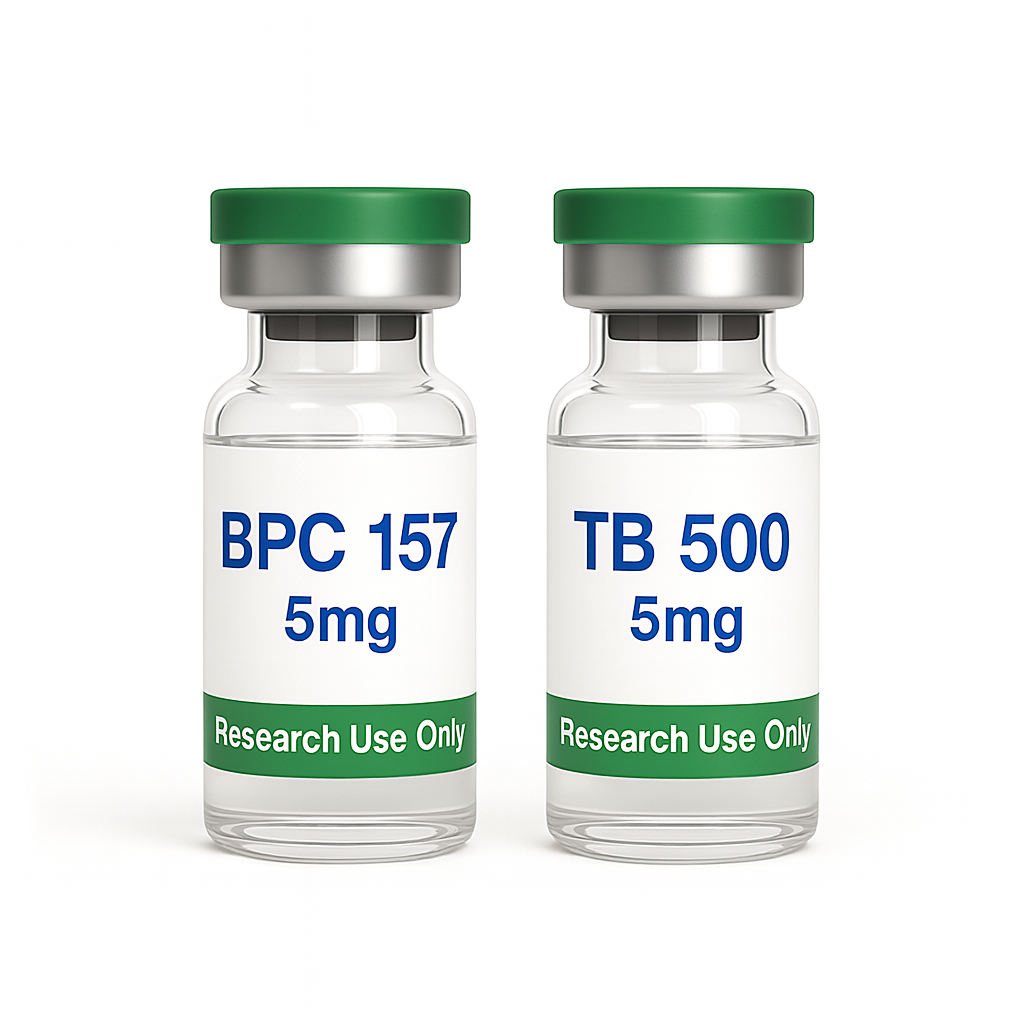
TB-500 (Thymosin β4): The Conductor of Cellular Motion and Tissue Remodeling
TB-500 is the synthetic active fragment of thymosin β4, naturally occurring in the human body. Its core function lies in regulating the cellular actin cytoskeleton—the cell's "moving muscle." By binding to actin, TB-500 promotes the directed migration of various repair cells, such as fibroblasts and endothelial cells, to the site of injury—the first step in tissue repair. It is not only a "cell recruiter" but also an "inflammation mediator," reducing key pro-inflammatory factors such as IL-1β and IL-6 while upregulating anti-inflammatory mediators. Furthermore, by activating pathways such as integrin-linked kinase (ILK), it directly stimulates endothelial cell differentiation to form new blood vessels and regulates the activity of matrix metalloproteinases (MMPs), optimizing the degradation and reconstruction of the extracellular matrix, thereby reducing the formation of abnormal scars (fibrosis) and promoting the restoration of tissue structure and function closer to that of the original tissue.
The Deep Mechanism of Synergistic Effect: Constructing a Seamless Healing Cascade
The combined application of BPC-157 and TB-500 is akin to deploying a well-organized and closely coordinated "special forces" team for the repair process.
Perfect Spatiotemporal Relay: In the acute phase following injury, BPC-157 acts swiftly, effectively controlling excessive inflammatory responses, reducing tissue edema and secondary damage, and immediately initiating angiogenesis signals, establishing a "supply line" for the repair battlefield. Subsequently, TB-500's effects reach their peak, recruiting a large number of repair cells to migrate along the newly established vascular network to the precise injury site and beginning to clean up necrotic debris and rebuild a healthy extracellular matrix. This natural transition between action phases avoids the limitations of the limited time window of a single molecule's action.
Dual Enhancement of Angiogenesis: Angiogenesis is the lifeblood of healing. BPC-157 "issues instructions" at the level of upregulating growth factor signaling, while TB-500 "executes the instructions" at the level of promoting endothelial cell migration and lumen formation. The combined action of these two peptides not only accelerates the establishment of a vascular network but also results in more mature and functionally stable vascular structures, providing a sustained and abundant blood supply to the repair area.
A precise balance between anti-inflammation and repair promotion: Excessive inflammation damages tissue, while suppressing all inflammation hinders the initiation of repair signals. These two peptides work together to create a "smart" inflammatory microenvironment: they inhibit harmful, destructive excessive inflammation while preserving and enhancing inflammatory signals crucial for initiating the repair process. This precise regulation avoids the healing delays that can occur with traditional anti-inflammatory drugs.
A leap from structural repair to functional recovery: The robust collagen synthesis promoted by BPC-157, combined with TB-500's optimized collagen arrangement and reduced scar formation, means that repaired tissue not only closes the gap quickly but also restores good elasticity, strength, and flexibility. This is crucial for the functional rehabilitation of tendons, ligaments, and muscles.
Clinical Applications and Empirical Potential
Complex Sports Injuries: For Achilles tendinopathy, rotator cuff tears, or anterior cruciate ligament (ACL) injuries, combined therapy can simultaneously address painful inflammation, promote the proliferation and migration of tendon/ligament progenitor cells, and improve collagen fiber arrangement, potentially shortening recovery time and reducing the risk of re-injury in athletes.
Difficult-to-Heal Wounds: In diabetic foot ulcers or venous leg ulcers, healing stagnation often stems from ischemia and chronic inflammation. This combination powerfully breaks this cycle, bringing new life to the wound bed through synergistically enhanced angiogenesis and anti-inflammatory effects, promoting granulation tissue growth and epithelialization.
Muscle Strains and Contusions: TB-500 directly promotes myoblast migration and fusion, accelerating muscle fiber regeneration; BPC-157 protects damaged muscles from further oxidative stress and improves local blood circulation. Combined use can significantly reduce hematoma absorption time and accelerate strength recovery.
Joint and Bone Health: Preliminary studies suggest that this combination may offer potential benefits for degenerative joint diseases by promoting synovial health, improving joint lubrication, and mitigating osteoarthritis-related subchondral bone remodeling. Positive effects on callus formation and bone healing have also been observed in fracture models.
Safety Spectrum, Considerations, and Future Exploration: Based on preclinical studies and limited clinical experience, both BPC-157 and TB-500 have demonstrated good tolerability and low adverse reaction rates at therapeutic doses. Subcutaneous injection is the common route of administration, with local injection also used for specific injuries. However, the medical community remains cautious:
Standardized Data Needs Improvement: Large-scale, multicenter, randomized, double-blind clinical trials are urgently needed to establish standardized dosing regimens (dosage, frequency, duration) for different indications.
Long-Term Safety Monitoring: Although peptides are naturally metabolized in the body, their long-term, repeated systemic effects require longer-term observation.
Personalized Treatment Strategies: Optimizing the ratio and timing of these two peptides based on injury type, severity, patient age, and overall health status is a key issue in the era of precision medicine.
Conclusion: Towards a New Era of Synergistic Regenerative Medicine
The combination of BPC-157 and TB-500 marks a strategic shift in regenerative medicine from single-target intervention to multi-pathway synergistic regulation. Like two skilled craftsmen, one excels at building a robust repair scaffold and supply lines (BPC-157), while the other excels at delicate cell sculpting and structural remodeling (TB-500), working together to complete a complex tissue repair project. Although further research is needed, this synergistic therapy based on biological mechanisms undoubtedly provides a promising new paradigm for overcoming traditionally incurable tissue injuries. It is not just about "healing," but also about "high-quality, functional regeneration," representing a highly promising direction for the future development of rehabilitation medicine.
Tirzepatide Frequently Asked Questions
BPC-157 helps protect and rebuild from the inside, while TB500 supports mobility, flexibility, and circulation. When taken together—with proper separation—they offer full-spectrum recovery support.
Here are five risks to consider before taking unregulated peptide injections.
Injection Site Pain or Skin Reaction. Peptide injections may cause skin reactions, and some people who use BPC-157 have reported injection site pain and swelling.
Potential Drug Interactions.
Fatigue or Headaches.
GI Issues or Appetite Changes.
In heart disturbances, stable gastric pentadecapeptide BPC 157 especial therapy effects combine the therapy of myocardial infarction, heart failure, pulmonary hypertension arrhythmias, and thrombosis prevention and reversal.
BPC 157 injections take effect quite quickly. That said, the exact timeline for experiencing the benefits is related to the nature of the condition or injury being addressed. In many cases, patients start to notice a decrease in pain and inflammation after a few days to a week following their first injection.
Post time: Dec-10-2025