

What Is PT-141?
PT-141, also known as Bremelanotide, is a synthetic peptide derived from α-melanocyte-stimulating hormone (α-MSH). It is primarily used to treat hypoactive sexual desire disorder (HSDD), particularly in premenopausal women, and has also been studied for male sexual dysfunction.
Unlike traditional erectile dysfunction medications, PT-141 works at the level of the brain rather than directly targeting blood flow.
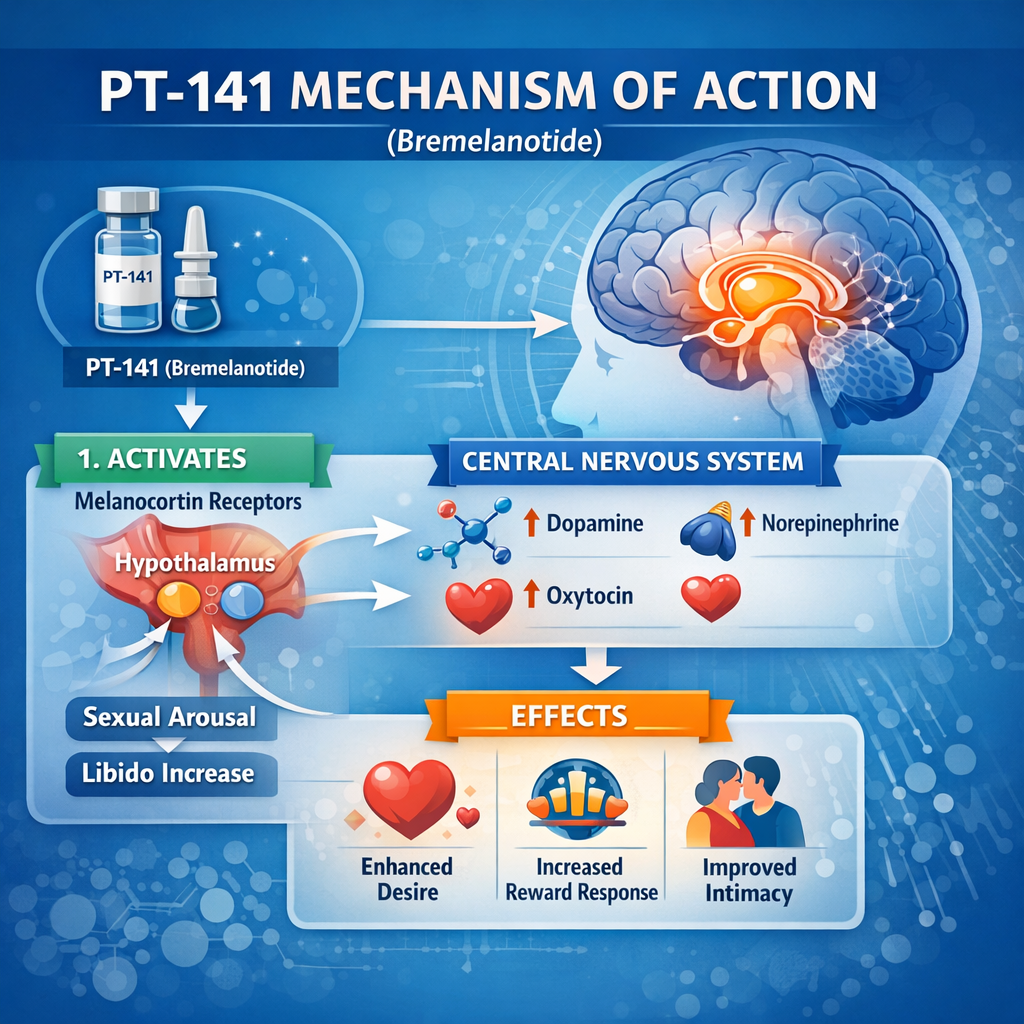
PT-141 Mechanism of Action
The primary mechanism of PT-141 involves activation of melanocortin receptors in the central nervous system.
1. Activation of Melanocortin Receptors
PT-141 is a melanocortin receptor agonist, meaning it stimulates specific melanocortin receptors in the brain, primarily:
-
MC4R (Melanocortin-4 Receptor) – the main receptor associated with sexual desire and arousal
-
MC3R (Melanocortin-3 Receptor) – plays a supportive regulatory role
These receptors are located in areas of the brain such as the hypothalamus, which regulates sexual behavior, motivation, appetite, and reward pathways.
When PT-141 binds to MC4R, it activates intracellular signaling cascades that increase neuronal activity in pathways responsible for sexual motivation and arousal.
2. Central Nervous System Activation
Unlike PDE-5 inhibitors (such as sildenafil), PT-141 does not act on penile blood vessels. Instead, it works centrally within the brain.
By stimulating melanocortin receptors, PT-141:
-
Enhances sexual desire signals
-
Increases sexual motivation
-
Improves subjective arousal
-
Amplifies responsiveness to sexual stimuli
Because it acts upstream in the brain’s arousal circuitry, PT-141 can increase desire itself—not just physical performance.
3. Dopamine and Neurotransmitter Modulation
Activation of MC4R influences several neurotransmitter systems, particularly:
-
Dopamine – central to reward, pleasure, and sexual motivation
-
Norepinephrine – increases alertness and arousal
-
Oxytocin (indirect effects) – associated with bonding and intimacy
The increase in dopaminergic signaling is believed to be a key driver of PT-141’s pro-sexual effects. Dopamine plays a critical role in the brain’s reward system, making sexual activity feel desirable and motivating engagement.
How PT-141 Differs from PDE-5 Inhibitors
| Feature | PT-141 (Bremelanotide) | Sildenafil (Viagra) |
|---|---|---|
| Primary Target | Brain (CNS) | Penile blood vessels |
| Mechanism | MC4R activation | PDE-5 inhibition |
| Effect on Desire | Increases libido | Does not increase libido |
| Requires Sexual Stimulation | Not strictly required | Required for effect |
| Main Benefit | Enhances sexual desire | Improves erectile rigidity |
PT-141 addresses sexual dysfunction at the level of desire and arousal signaling, whereas PDE-5 inhibitors primarily improve vascular performance.
Systemic and Physiological Effects
Because melanocortin receptors also regulate other functions, PT-141 may cause:
-
Mild increases in blood pressure
-
Flushing
-
Nausea
-
Temporary changes in appetite
These effects are related to melanocortin signaling in autonomic and hypothalamic centers.
Summary
PT-141 works by:
-
Activating melanocortin receptors (primarily MC4R) in the brain
-
Enhancing dopaminergic and arousal pathways
-
Increasing sexual desire and motivational signaling
Rather than improving blood flow, PT-141 stimulates the neural circuits that generate sexual interest and drive, making it a centrally acting libido enhancer.

Post time: Mar-02-2026